- April 28, 2026
- TheHighlineDispensary
- No Comments
How Long Does Cannabis Stay in Your System?
How long cannabis stays detectable in your body depends on what's being tested, how much you use, and the biology of the person in question. Here's what the research actually shows.
It's one of the most common questions asked in dispensaries: how long does cannabis stay in your system? The answer matters for drug testing, for people returning to work after use, for understanding tolerance, and for safety around driving. It's also genuinely complicated — the answer depends heavily on what you mean by "in your system."
Here's what the science says, broken down by the factors that actually matter.
Two Different Questions, Two Different Answers
"In your system" usually means one of two things:
- How long does cannabis affect you? The answer is usually a few hours.
- How long is cannabis detectable in a test? The answer can be days to months.
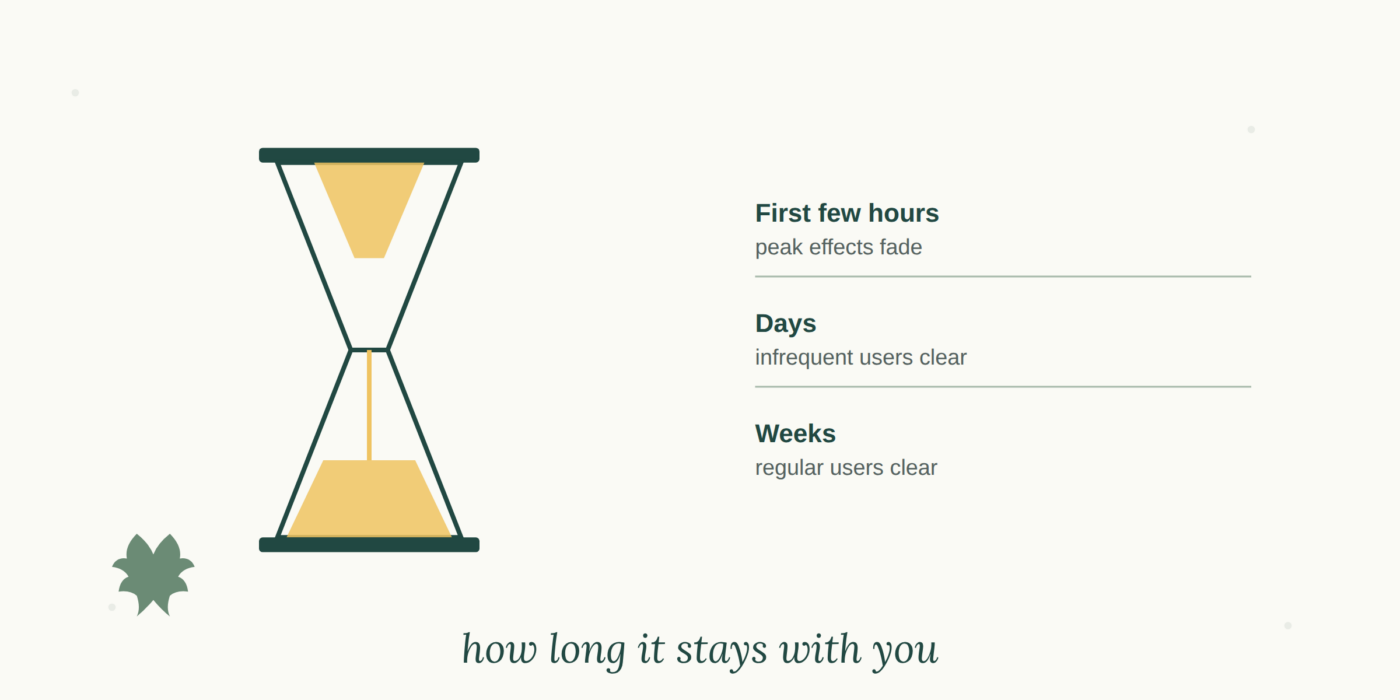
These are very different. The psychoactive effects of THC fade well before the compound leaves your body. What drug tests detect aren't the effects — they're metabolites (breakdown products) that linger long after the high is gone.
How THC Moves Through the Body
When you consume THC, it enters the bloodstream, crosses the blood-brain barrier, and binds to CB1 receptors (read our endocannabinoid system guide for more on that). Your liver then metabolizes it into dozens of breakdown products. The most persistent is called THC-COOH (technically 11-nor-9-carboxy-THC). Drug tests are generally looking for this metabolite, not THC itself.
Here's the key fact: THC and its metabolites are fat-soluble, which means they get stored in fat tissue and released slowly back into the bloodstream over time. Water-soluble compounds (alcohol, most medications) flush out in hours. Fat-soluble compounds like THC can stick around for weeks.
Detection Windows by Test Type
Urine Tests (most common)
Urine tests detect THC-COOH. Typical detection windows based on frequency of use:
| Use Frequency | Typical Detection Window |
|---|---|
| Single use / first-timer | 3 days |
| Occasional (1-3x/week) | 3-7 days |
| Regular (daily) | 10-15 days |
| Chronic heavy (multiple times daily) | 30+ days, sometimes 60-90 days |
These ranges come from clinical research reviewed by the National Institutes of Health (Musshoff & Madea, 2006). Individual results vary substantially.
Blood Tests
Blood tests detect active THC, which is metabolized quickly. Detection windows are much shorter:
- Occasional use: 1-2 days
- Daily use: up to a week
Because blood tests detect recent use, they're sometimes used in DUI cases and workplace incident investigations. They're less common than urine tests because they're invasive and have a narrow window.
Saliva (Oral Fluid) Tests
Saliva testing is increasingly common, particularly for roadside tests and post-incident workplace tests. Detection window:
- Occasional use: 24-48 hours
- Daily use: up to 72 hours or more
Saliva tests are looking for recent consumption, not long-term use history.
Hair Tests
Hair tests have the longest detection window — up to 90 days — because THC metabolites are deposited in the hair shaft as it grows. They're less common because they're expensive and can't detect very recent use (it takes about a week for new use to show up in hair). Hair tests are also subject to accuracy debates, especially regarding second-hand smoke exposure.
Factors That Change the Timeline
Frequency of Use (Biggest Factor)
How often you use cannabis is by far the biggest variable. A single use typically clears in days; daily chronic use can take a month or longer. This is because THC accumulates in fat tissue over time and releases slowly.
Body Fat Percentage
Higher body fat percentage = more places for THC to store = longer detection window. This is also why weight loss or intense exercise can temporarily increase THC levels in your blood or urine: stored metabolites get released from fat as fat cells are burned.
Metabolism
Faster metabolism clears THC faster. Age, sex, thyroid function, and overall health all affect metabolic rate. Younger people tend to clear THC faster than older people, all else equal.
Hydration and Urine Dilution
Dilute urine (from drinking lots of water) may show lower concentrations of THC-COOH, but legitimate labs test for creatinine levels to detect dilution. "Dilution hacks" are generally unreliable.
Potency and Dose
Higher-potency products and larger doses create longer detection windows. A single hit of 20% flower has a shorter detection window than an edible containing 50mg THC.
Method of Consumption
Smoking, vaping, and edibles all produce the same metabolites, but edibles tend to create longer metabolite activity because they're processed through the liver first (producing 11-hydroxy-THC, which is more potent and longer-lasting).
The CBD Question
Pure CBD isolate should not cause a failed THC test. However:
- Full-spectrum CBD products often contain trace THC (legally up to 0.3% by weight). Heavy daily use can accumulate enough THC to trigger a positive result on a sensitive test.
- Broad-spectrum CBD has THC removed but retains other cannabinoids. Safer for drug-tested individuals, though not 100% risk-free.
- CBD isolate is just CBD — safest for drug-tested individuals.
If drug testing is a concern, ask specifically for CBD-isolate products and check the Certificate of Analysis to verify undetectable THC content. See our label-reading guide for more on interpreting COAs.
What About "Detox" Products?
The internet is full of products claiming to flush THC from your system quickly — detox drinks, pills, teas. Most are unsupported by research, and some are actively harmful. Legitimate drug-testing labs are aware of these products and typically test for dilution markers. Time and natural metabolism remain the only reliable ways to clear THC from your body.
The Honest Answer
If you have a drug test scheduled and you use cannabis, there's no reliable shortcut. Your realistic options are (1) stop using cannabis well in advance, (2) discuss medical-use protections with an attorney if applicable (New York has employment protections for adult-use cannabis), or (3) discuss alternative products with a knowledgeable budtender.
What NY Workplace Protections Actually Cover
New York's Marijuana Regulation and Taxation Act (MRTA) provides significant employment protections for adult-use cannabis users, including prohibitions on most employers testing for off-duty cannabis use. However, there are exceptions for safety-sensitive positions and federal contractors. For a full breakdown of what's and isn't allowed, see our NY cannabis law guide.
Practical Takeaways
What to remember
- Urine tests, the most common type, detect THC for 3-7 days for occasional users and 30+ days for chronic users
- The active high of THC fades well before the compound clears your system
- THC is fat-soluble, which is why detection windows are so much longer than alcohol or stimulants
- Frequency of use matters more than any other single factor
- CBD-only products should not cause a failed THC test, but verify via COA
- "Detox" products are mostly unreliable; time is the only proven method
What to look for at The Highline
A snapshot of the kinds of products our team can walk you through. Tap any category for what's in stock right now.
Local? We deliver to Dobbs Ferry, Ardsley, Irvington, and Yonkers. Or come visit us at 45 Main Street, Hastings-on-Hudson. Browse our live menu for what's in stock today.
Common Questions
How long does THC stay detectable in urine?
For an occasional user (less than once a week), THC metabolites are typically detectable in urine for 3-7 days. Daily users may test positive for 30 days or longer after their last use. This is the most common drug test.
How long does THC stay in your blood?
Active THC is detectable in blood for 1-2 days after occasional use and up to a week for daily users. Blood tests are less common than urine tests because they detect recent use, not past use.
How long does THC stay in saliva?
Saliva tests typically detect THC for 24-72 hours after use. Chronic users may test positive longer. Saliva tests are increasingly common for roadside and workplace testing.
Can CBD cause a failed drug test?
Pure CBD should not cause a failed THC test. However, many CBD products contain trace amounts of THC, and heavy daily use of full-spectrum CBD can theoretically accumulate enough THC to trigger a positive result. If drug testing is a concern, choose THC-free CBD products and verify via COA.
What factors affect how long cannabis stays in your system?
Frequency of use (biggest factor), body fat percentage (THC is fat-soluble and stores in fat tissue), metabolism, hydration, potency of product used, and individual enzyme activity. Exercise and weight loss can temporarily increase THC detection by releasing stored metabolites.
Keep Reading
Ready when you are.
Three ways to start — whichever fits your day.
Or join the VIP list for new drops and member-only deals →