- April 28, 2026
- TheHighlineDispensary
- No Comments
Cannabis Flower Grades Explained: Top-Shelf, Mid-Tier & Small Bud
Top-shelf, mid-tier, smalls, shake. These terms describe real differences in how cannabis flower is grown, handled, and sold — and understanding them will save you money and get you better product.
Walk into a New York dispensary and you'll see cannabis flower at several different price points — sometimes the same strain from the same cultivator, at noticeably different prices. What's actually different? The answer is flower grade, and it's one of the most useful concepts in cannabis shopping.
The Grade System, Briefly
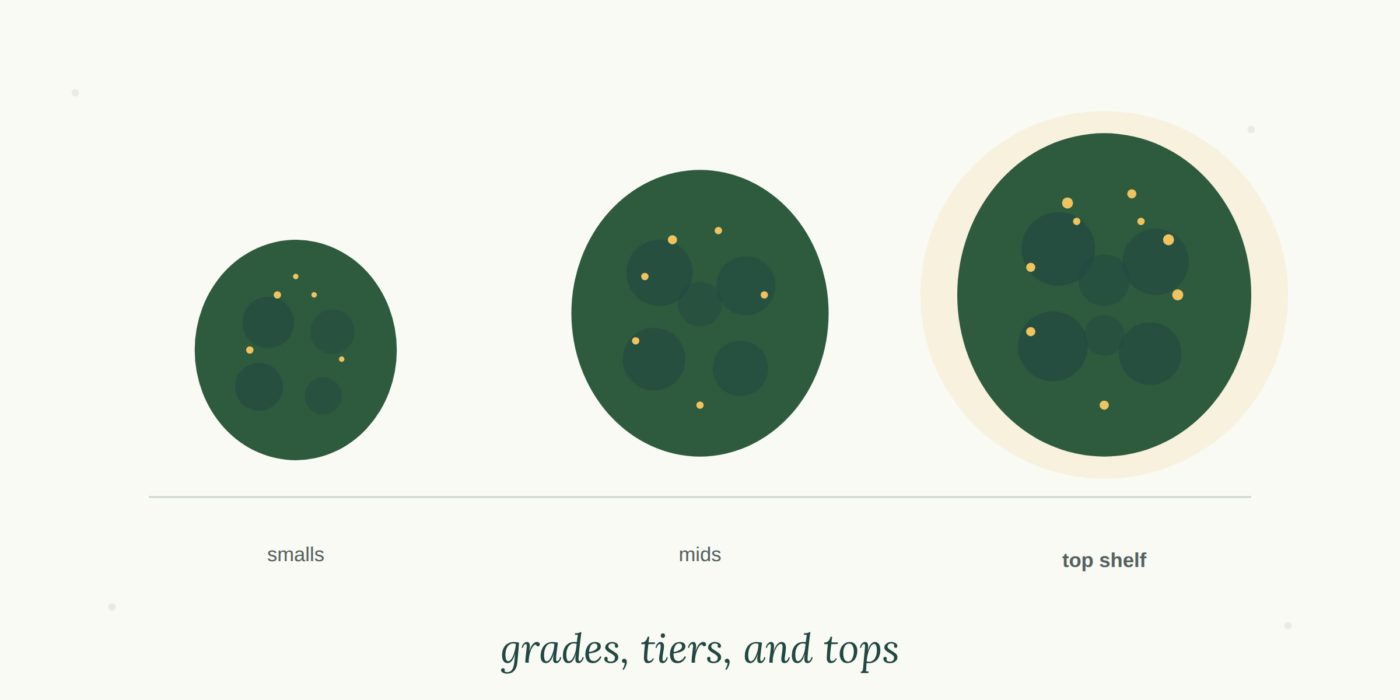
There's no official regulatory grading system for cannabis flower the way there is for beef or olive oil. The industry has settled on informal categories based on bud size, appearance, handling, and origin. Most NY dispensaries use some version of this:
| Grade | What It Is | Typical Price Range |
|---|---|---|
| Top-shelf / premium | Large, dense, photogenic buds from the best of a harvest | $$$$ |
| Mid-tier | Solid quality, smaller buds, commercial-scale production | $$$ |
| Smalls / popcorn | Smaller buds from same plants as top-shelf | $$ |
| Shake | Broken-off loose flower | $ |
| Trim | Small leaves trimmed off buds | Usually not sold as smokable flower |
Top-Shelf: What You're Actually Paying For
Top-shelf flower is the best expression of a cultivar. Large, dense, well-shaped colas; rich trichome coverage (the sticky crystals that contain most of the cannabinoids); tight trim without leafy excess; vivid color; and a strong, accurate aroma. These are the buds you'd want to photograph.
Quality at this level isn't accidental. It usually requires:
- Small-batch indoor cultivation or greenhouse growing with careful environmental control
- Hand trimming rather than machine trimming (machine-trimmed buds lose trichomes)
- Slow cure of 4-8+ weeks in jars with careful burping to preserve terpenes
- Careful handling at every stage — trichomes are fragile and break off easily
Expect Total THC in the 22-32% range and a rich terpene profile. For what those numbers actually mean, see our guide to reading cannabis labels.
Mid-Tier: The Sweet Spot for Most Shoppers
Mid-tier flower can still be excellent. It's typically from larger-scale operations with solid genetics, but less of the obsessive hand-crafting that separates top-shelf. You're paying for working-class quality without the connoisseur markup.
Good mid-tier flower will still have:
- Properly cured buds that aren't dry or overly moist
- A recognizable, accurate terpene profile
- Total THC in the 18-24% range, often with meaningful minor cannabinoid content
- Lab-verified safety and potency (all NY product is tested)
For daily-driver flower, mid-tier is where most experienced shoppers spend most of their money.
Smalls: The Best Value in Cannabis
Here's the industry secret: "smalls" (sometimes called "popcorn" for the size) are usually the exact same flower as top-shelf — same strain, same plant, same harvest, same genetics, same terpene profile. They're just smaller individual buds, grown lower on the plant where less light reached them or on the outer branches.
Because they're not as visually impressive, they get priced 20-40% lower. But when you grind them for a joint or a bowl, ground flower is ground flower. The smoke is identical; the effect is identical.
When Smalls Are the Smart Buy
If you're grinding for joints or vaporizers, if you're making edibles or infusions, or if you just want the best flower for your budget — smalls from a premium cultivator usually beat top-shelf from a mid-tier brand. Don't pay for appearance if you're not going to see it.
Shake and Trim: The Fine Print
Shake
Shake is what settles at the bottom of a jar or bag — small pieces of bud that broke off during handling. It's still flower, just in smaller pieces. Good shake smokes fine; it's often used in multi-pack pre-rolls and budget grinds. Test it the same way you'd test any flower: does it smell right? Does it have trichomes? Is it properly cured?
Trim
Trim is the leaf material trimmed away from buds during processing. The small "sugar leaves" closest to the buds contain some trichomes and have light cannabinoid content, but they also contain more chlorophyll and burn harsher. You'll rarely see trim sold as smokable flower at a reputable NY dispensary — it's almost always processed into concentrates, edibles, or low-cost infusions.
Indoor, Greenhouse, and Outdoor: Growing Method Matters
Grade is about the final product; growing method is about how it was produced. All three methods can produce excellent flower.
- Indoor — full environmental control. Typically produces the most dense, visually stunning buds with the highest trichome coverage. Most expensive to produce.
- Greenhouse / mixed-light — natural sun supplemented with artificial lighting. Good balance of quality and cost; many premium NY brands use this method.
- Outdoor / sungrown — natural sun only. Lower cost, often better terpene expression, but less dense buds. Underrated category.
Outdoor cannabis has become more popular among connoisseurs recently — full-sun plants often develop more complex terpene profiles than their indoor equivalents, even if they look less flashy. Don't dismiss outdoor flower just because it's less expensive.
What Grade Doesn't Tell You
Grade is about flower quality. It doesn't tell you:
- How it'll feel. That's about strain, terpenes, and your own body — see our guide to indica vs. sativa vs. hybrid.
- Whether it's fresh. Check the packaging date on the label.
- Whether it passed lab testing. All NY cannabis is tested, but some batches test better than others. Ask for the COA.
- Whether it's the right product for you. A fantastic top-shelf sativa might be completely wrong for someone looking for sleep help.
How to Pick Between Grades
A practical framework:
Match grade to use case
- Special occasion, personal enjoyment — top-shelf, single-source, premium brand
- Daily flower, pipes and joints — mid-tier or premium smalls
- Vaporizer material — smalls (you don't see it)
- Pre-roll rolling at home — ground smalls or mid-tier
- Edibles / infusions — shake or cheap smalls (potency matters, not looks)
Real Talk from the Counter
The budtenders at most dispensaries will tell you the same thing: if you're shopping daily, premium smalls beat mid-tier top-shelf almost every time. If you're shopping for the experience of handling a beautiful bud, go top-shelf. Know what you're paying for.
What to look for at The Highline
A snapshot of the kinds of products our team can walk you through. Tap any category for what's in stock right now.
Local? We deliver to Dobbs Ferry, Ardsley, Irvington, and Yonkers. Or come visit us at 45 Main Street, Hastings-on-Hudson. Browse our live menu for what's in stock today.
Common Questions
What makes cannabis 'top-shelf'?
Top-shelf flower is the best expression of a given cultivar — dense, well-trimmed buds with visible trichomes, rich aroma, and a high cannabinoid and terpene profile. These are typically the largest, most photogenic colas from the best-growing plants, hand-trimmed and slow-cured. They command the highest prices.
Are small buds lower quality than full-size ones?
No. Small buds (or 'smalls') are typically the same flower as the top-shelf version — same strain, same plant, same terpene profile — just smaller individual nugs that grew lower on the plant or toward the edges of branches. They're priced lower because they look less impressive, not because they smoke worse.
What's the difference between shake and trim?
Shake is loose flower that settled at the bottom of a container — usually intact buds that broke apart. Trim is the small leaves trimmed off buds during processing. Shake is better smoking material than trim. Both are used in cheaper pre-rolls and in making concentrates.
Is top-shelf always worth the price?
Not necessarily. If you're making edibles, infusions, or concentrates, top-shelf is wasted — you're not preserving the appearance. For smoking flower where looks and flavor matter, the difference is real. For everyday use, mid-tier and smalls often offer better value.
Why are some cannabis brands more expensive than others?
Brand pricing reflects growing methods (indoor vs. outdoor, small-batch vs. commercial), cultivation skill, genetics (some strains are harder to grow), and brand positioning. Price alone isn't a reliable quality indicator — check the COA, terpene profile, and cultivation details.
Keep Reading
Ready when you are.
Three ways to start — whichever fits your day.
Or join the VIP list for new drops and member-only deals →