- April 28, 2026
- TheHighlineDispensary
- No Comments
THC vs. CBD: Which Cannabinoid Should You Buy?
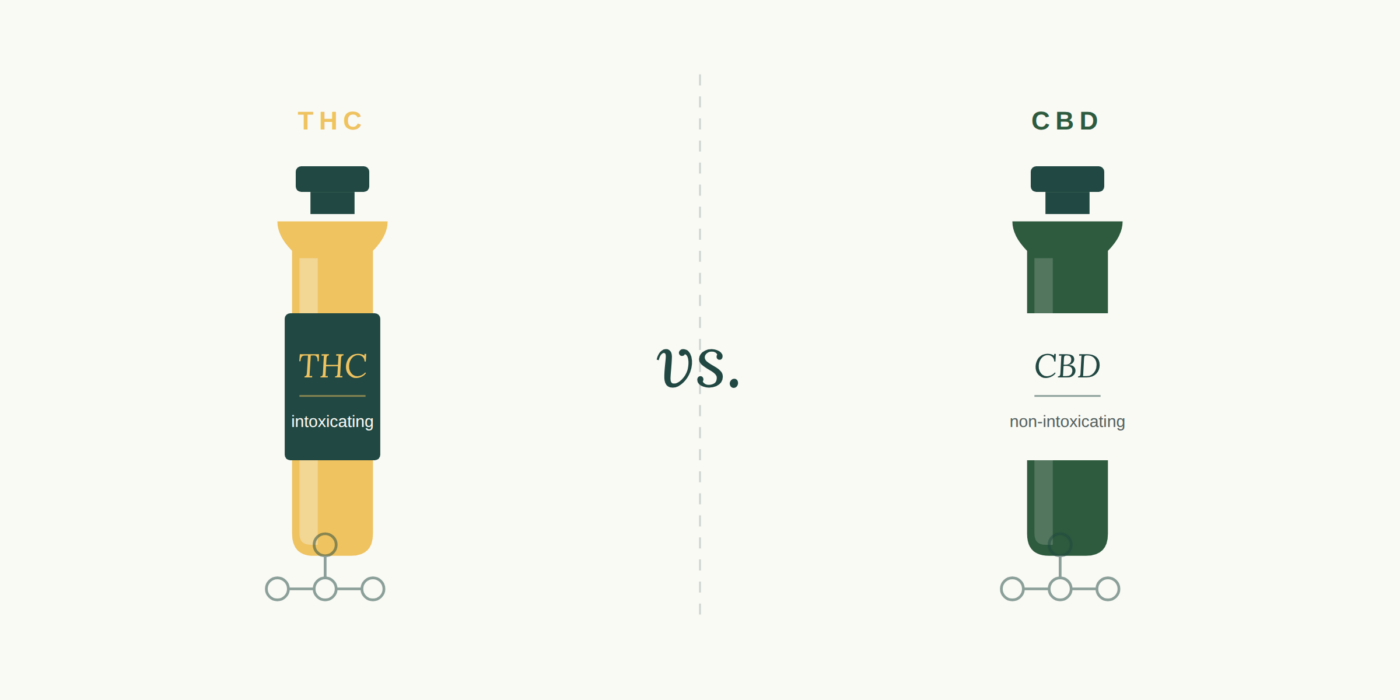
THC and CBD are the two cannabinoids most people have heard of. They come from the same plant, share a similar molecular structure, and yet produce dramatically different effects. Understanding the difference is the most important shopping skill in cannabis.
Cannabis contains over a hundred cannabinoids, but two of them dominate the conversation: THC (tetrahydrocannabinol) and CBD (cannabidiol). They're cousins at the molecular level — nearly identical chemical structures, dramatically different effects on the body. Understanding the difference between them is the foundation of smart cannabis shopping.
The Quick Take
| Question | THC | CBD |
|---|---|---|
| Does it get you high? | Yes | No |
| Federally legal? | No | Yes (hemp-derived, <0.3%) |
| Legal in NY for adults? | Yes (21+) | Yes |
| Drug test risk? | High | Low (with isolate) |
| Tolerance builds? | Yes | Minimal |
| Best for acute pain? | Often yes | Sometimes |
| Best for inflammation? | Helps | Often yes |
| Best for anxiety? | Mixed (can worsen) | Often yes |
| Best for sleep? | Effective short-term | Mild |
What THC Does
THC is the cannabinoid responsible for the cannabis "high." It binds strongly to CB1 receptors in the brain, producing:
- Euphoria and altered perception
- Relaxation or stimulation depending on dose and strain
- Increased appetite (the "munchies")
- Pain relief, particularly for neuropathic pain
- Sleep induction at higher doses
- Potential anxiety, paranoia, or cognitive impairment at high doses
The effects start within seconds (smoked) to 30-90 minutes (edibles) and last 1-8 hours depending on consumption method. For more on how this works in your brain, see our science of getting high.
What CBD Does
CBD doesn't bind strongly to CB1 receptors. Instead, it interacts with multiple body systems — CB2 receptors, serotonin receptors, vanilloid receptors, and others. The result is a broad range of subtle effects:
- Anti-anxiety effects (with research support)
- Anti-inflammatory action
- Modest pain relief
- Mild relaxation without intoxication
- Possible improvements in sleep quality (more from anxiety reduction than sedation)
- FDA-approved for certain pediatric epilepsy syndromes (as Epidiolex)
For more on the receptor mechanics, see our endocannabinoid system guide.
The Same Molecule, Just Slightly Different
Here's the wild part: THC and CBD have nearly identical molecular formulas (C₂₁H₃₀O₂). The only difference is one chemical bond — THC has a closed ring, CBD has an open chain. That tiny structural difference completely changes how each molecule fits into receptors. THC's shape lets it activate CB1 receptors strongly; CBD's shape doesn't.
This is the kind of detail that becomes useful when shopping: it's the same plant, the same family of compounds, and yet the experiences are entirely different.
Choosing THC, CBD, or Both
Choose THC When You Want
- The classic cannabis "high"
- Strong appetite stimulation
- Significant pain relief
- Sleep induction
- Recreational effects
- Relief from nausea
Choose CBD When You Want
- Cannabis benefits without intoxication
- Anxiety reduction
- Anti-inflammatory effects
- Drug-test compatibility (with isolate products and COA verification)
- Daytime function with some cannabinoid support
- Daily wellness without building tolerance
Choose Both (1:1 Balanced) When You Want
- THC effects without as much intensity
- Reduced anxiety risk while maintaining some high
- Better-than-either pain relief for many users
- A comfortable starting point if you're new to cannabis
Choose CBD-Dominant Ratios (1:5, 1:10) When You Want
- Mostly CBD effects with a small amount of THC
- Slight cannabis "lift" without intoxication
- Excellent daytime use option
Legal Differences in New York
NY is more permissive than most states. Both THC and CBD products are widely available, but with different legal frameworks:
- Adult-use cannabis (THC, including high-THC products) — legal for adults 21+ at licensed dispensaries. Sold by The Highline.
- Medical cannabis — legal under prescription through medical dispensaries.
- Hemp-derived CBD — legal at all ages, no prescription, sold widely outside dispensaries (gas stations, drugstores, smoke shops).
Quality varies dramatically between these channels. Cannabis dispensaries sell only lab-tested, regulated products. Hemp-CBD outside dispensaries varies widely in quality, accuracy, and contaminants. For more, see our is weed legal in New York? guide.
What "Full-Spectrum" vs. "Isolate" Means
- Full-spectrum — contains the full range of cannabinoids (including small amounts of THC), plus terpenes and flavonoids. Often produces stronger overall effects (the "entourage effect").
- Broad-spectrum — multiple cannabinoids but THC removed. Good for drug-tested users who still want cannabinoid variety.
- Isolate — single cannabinoid, 99%+ pure. Most common for CBD; provides the cleanest single-cannabinoid experience.
Drug Testing Considerations
If You're Drug Tested
THC products will trigger positive results. CBD products are generally safe but require care: full-spectrum CBD contains trace THC and can theoretically accumulate. If drug testing is critical, choose CBD isolate products from licensed dispensaries with current COAs verifying THC content below detection limits. For more, see our how long does cannabis stay in your system? guide.
How to Pick Products with the Right Ratio
Most NY dispensary products list cannabinoid content on the label. Look for:
- Total mg of THC and total mg of CBD per package
- Per-serving content for edibles and beverages
- Mg-per-ml for tinctures
- The ratio (e.g., "1:1 THC:CBD" or "20:1 CBD:THC")
For a complete walkthrough, see our label-reading guide.
Beyond THC and CBD
This guide focuses on the two most-recognized cannabinoids, but the cannabis plant produces over a hundred. Some you'll see on NY dispensary labels:
- CBN (cannabinol) — sleep-associated, increasingly available in sleep-formulated products
- CBG (cannabigerol) — non-intoxicating, associated with focus and alertness
- CBC (cannabichromene) — possible anti-inflammatory and mood-supporting effects
- THCV (tetrahydrocannabivarin) — non-intoxicating at low doses, associated with appetite suppression
For more on the full cannabinoid family, see our cannabinoids explained guide.
If You're Choosing Right Now
A 1:1 balanced THC:CBD product is the most universally well-tolerated choice for someone exploring the difference. You'll get a clear sense of what THC adds and what CBD subtracts. From that reference point, you can drift toward more THC, more CBD, or stay balanced based on what you actually felt.
What to look for at The Highline
A snapshot of the kinds of products our team can walk you through. Tap any category for what's in stock right now.
Local? We deliver to Yonkers, White Plains, New Rochelle, and Scarsdale & Greenburgh. Or come visit us at 45 Main Street, Hastings-on-Hudson. Browse our live menu for what's in stock today.
Common Questions
Will CBD get me high?
No. CBD is non-intoxicating — it doesn't bind strongly to CB1 receptors in the brain the way THC does. CBD can affect mood (it has anti-anxiety properties) but won't produce the altered perception, euphoria, or impairment that THC produces.
Can CBD cause a failed drug test?
Pure CBD isolate should not cause a failed THC test. However, full-spectrum CBD products contain trace THC (legally up to 0.3%), and heavy daily use can theoretically accumulate enough to trigger a positive result. If drug testing is a concern, choose CBD isolate products and verify via COA.
Is THC better than CBD for pain?
Neither is universally better. THC tends to work better for acute pain, especially neuropathic pain, while CBD often works better for inflammatory pain. Many users find a balanced 1:1 THC:CBD ratio outperforms either alone for chronic pain. Individual response varies significantly.
Why is CBD legal everywhere but THC isn't?
Federal law treats hemp-derived CBD (under 0.3% THC) differently from cannabis. Hemp CBD is federally legal. Cannabis-derived CBD and any THC is federally illegal but state-legal in many places. New York's adult-use program legalizes both at the state level for adults 21+.
Can I take THC and CBD together?
Yes — and many users find combining them produces better results than either alone. CBD can moderate some THC effects (less anxiety, less paranoia) while preserving the benefits. The combination is sometimes called the 'entourage effect' when it includes the full plant profile of cannabinoids and terpenes.
Keep Reading
Ready when you are.
Three ways to start — whichever fits your day.
Or join the VIP list for new drops and member-only deals →