- April 28, 2026
- TheHighlineDispensary
- No Comments
Vape Cartridges Compared: Live Resin, Distillate, Live Rosin
Vape cartridges look identical from the outside, but what's inside varies enormously. Live resin, distillate, live rosin — the differences in flavor, potency, terpene preservation, and price are real and worth understanding.
The cartridge category is the most opaque on a dispensary shelf. Two carts can look identical, cost wildly different prices, and produce completely different experiences. The reason is what's inside: the oil. Understanding the three main types — distillate, live resin, and live rosin — is the difference between an okay vape experience and a great one.
The Three Main Cart Types
Distillate
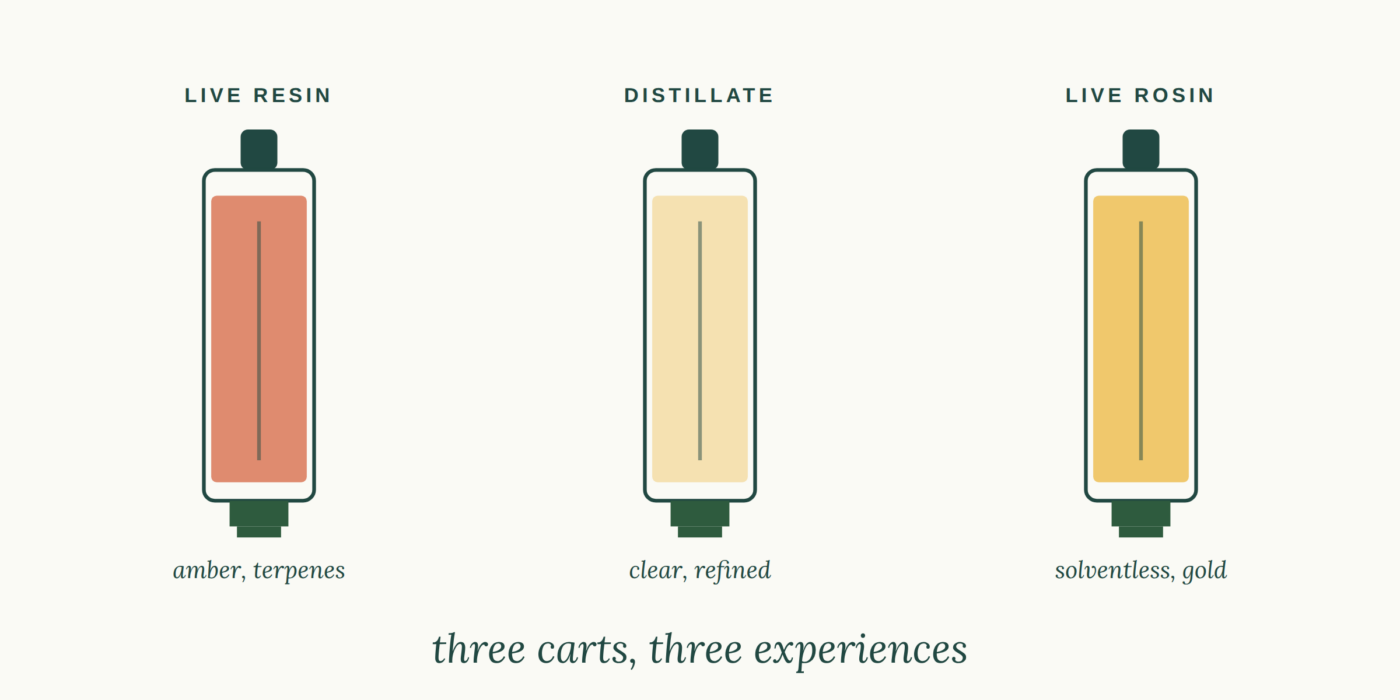
The most common and least expensive type. Cannabis oil is extracted from flower (usually with solvents), then distilled multiple times to remove almost everything except a single cannabinoid — typically THC. The result: 85-95% pure THC, clear or pale gold, with virtually no flavor.
Because distillate is essentially flavorless, manufacturers add back terpenes after distillation:
- Cannabis-derived terpenes — reintroduced from the same plant or from a different cannabis source. Authentic flavor, higher cost.
- Botanical terpenes — from other plants (orange peel, pine, lavender, etc.). Cheaper but doesn't quite taste like the named strain.
- "Strain-specific" distillate carts blend distillate with cannabis terpenes mimicking a particular strain.
Distillate carts are the cheapest entry point and the most consistent (manufactured at scale, no batch variability). For users who care more about THC delivery than flavor, distillate is fine. For people seeking authentic strain expression, distillate is a step down.
Live Resin
The middle tier and arguably the best balance of flavor and value. Live resin is extracted from fresh-frozen flower — flower that was flash-frozen immediately after harvest rather than dried and cured. This preserves the complete terpene profile of the living plant.
Production process:
- Cannabis is harvested and immediately frozen (no curing)
- Frozen flower is extracted with solvents (typically butane) at very low temperatures
- Solvent is purged off, leaving a viscous, terpene-rich extract
- Extract is loaded into cartridges
Result: 70-85% THC, amber color, dramatically richer flavor than distillate. The cart actually tastes like the strain it claims to be. Live resin carts are typically $50-80 in NY dispensaries.
Live Rosin
The premium category. Live rosin is solventless — no butane, no CO2, no chemicals at all. Production:
- Cannabis is harvested and frozen (same as live resin)
- Frozen flower is processed in ice water to separate trichomes (creates "bubble hash")
- Bubble hash is pressed with heat and pressure to extract the rosin
- Live rosin is loaded into cartridges (often without further processing)
Result: 70-85% THC, vivid gold color, exceptional flavor and clarity. Connoisseurs typically prefer live rosin for its solventless production and flavor purity. Prices run $70-120+ in NY dispensaries. For more on solventless concentrates, see our concentrates 101 guide.
Side-by-Side Comparison
| Feature | Distillate | Live Resin | Live Rosin |
|---|---|---|---|
| Extraction method | Solvent + distillation | Solvent (BHO) | Solventless (heat/pressure) |
| Starting material | Cured flower | Fresh-frozen flower | Fresh-frozen flower |
| THC % | 85-95% | 70-85% | 70-85% |
| Terpene preservation | None native; re-added | Excellent native | Excellent native |
| Flavor | Mild, often artificial | Authentic, rich | Authentic, exceptional |
| Solvent residue risk | Tested for | Tested for | None possible |
| NY price (0.5g) | $30-50 | $50-80 | $70-120 |
| Best for | Budget THC delivery | Flavor on a budget | Connoisseur experience |
What Terpenes Add to the Experience
Beyond flavor, the terpene difference between distillate and live resin/rosin shapes the actual high. Terpenes interact with cannabinoids to produce the "entourage effect" — the theory that the full plant profile produces effects different from THC alone.
- Distillate carts are essentially "pure THC plus added terpenes" — the high feels somewhat one-dimensional
- Live resin and live rosin carts feel more like smoking the actual strain — there's nuance, terpene-dependent body or head effects, and stronger differentiation between strains
For more on terpenes specifically, see our understanding terpenes guide.
How to Read a Vape Cart Label
NY vape labels include all the standard cannabis information plus cart-specific details:
- Extraction type (often advertised on the front: "live resin," "distillate," "live rosin")
- Total cannabinoid content (THC + minor cannabinoids)
- Terpene content (often listed as % of weight; 8%+ is excellent)
- Strain or terpene profile (specific named strain or terpene blend)
- Cartridge volume (0.5g or 1g most common)
- Hardware compatibility (510 thread is standard)
- Lab COA reference for purity and potency verification
For a complete walkthrough, see our label-reading guide.
The "Live" Word: What It Actually Means
"Live" on a cannabis label specifically means the starting material was fresh-frozen rather than dried and cured. It's not marketing fluff — it's a meaningful production specification. Live products preserve the full terpene profile because terpenes are volatile and many evaporate during the standard drying and curing process.
If you compare a "live" version of a cart to a "non-live" version of the same strain, the difference is dramatic. The live version smells and tastes like the strain in flower form. The non-live version smells and tastes like cannabis but isn't strain-specific.
Strain Selection in Cartridges
Live resin and live rosin carts are usually sold by strain name (Wedding Cake, Blue Dream, GG#4, etc.). Distillate carts are often sold by category (sativa, indica, hybrid) since the distilled THC itself doesn't carry strain character.
For more on what strain names mean, see our what's in a strain name? guide. For indica vs. sativa effects, see our strain types guide.
Quality and Safety Considerations
The 2019 EVALI lung injury outbreak was traced primarily to illicit-market THC cartridges cut with vitamin E acetate. Licensed NY dispensary cartridges are tested for residual solvents, pesticides, heavy metals, and other contaminants. They've been the safe option since legalization. Stay in licensed channels.
What to Avoid
Unlicensed-market vape cartridges, "specials" sold at low prices outside dispensaries, and any product without lab testing or COA. The cost difference between a licensed cart and a sketchy one is small; the risk difference is enormous.
Storage
Store vape cartridges upright (not horizontal) in a cool, dark place. Avoid heat — a hot car can damage both the oil and the battery. Cold can make oil viscous; let cold carts warm up before drawing. Most carts last 6-12 months at peak quality. For complete storage guidance, see our how to store cannabis.
If You're Picking Your First Quality Cart
Try a 0.5g live resin cart from a brand with strain-specific terpene profiles. Pick a strain you know you like (or have heard good things about). Compare the experience to a distillate cart in the same strain, if possible. The flavor and effect difference will tell you whether the price premium is worth it for you.
What to look for at The Highline
A snapshot of the kinds of products our team can walk you through. Tap any category for what's in stock right now.
Local? We deliver to Yonkers, Dobbs Ferry, Ardsley, and Irvington. Or come visit us at 45 Main Street, Hastings-on-Hudson. Browse our live menu for what's in stock today.
Common Questions
What's the difference between live resin and distillate?
Live resin is extracted from fresh-frozen flower with solvents (typically butane), preserving the full terpene profile of the original strain. Distillate is highly refined cannabis oil with most terpenes removed during distillation. Live resin tastes like the strain; distillate is mostly flavorless until terpenes are added back.
Is live rosin better than live resin?
Live rosin is solventless (no chemicals used in extraction) and is generally considered cleaner and more premium. Live resin uses butane or other solvents but produces excellent flavor at lower cost. Both are top-tier products. Live rosin commands higher prices because production is more labor-intensive and yields less.
Why do some carts taste better than others?
Terpenes. Live resin and live rosin preserve cannabis-derived terpenes from the original flower — these create authentic strain flavors. Distillate is mostly flavorless and gets terpenes added back, sometimes from cannabis (good) and sometimes from non-cannabis botanicals (less good).
Are some carts more potent than others?
Distillate is typically the highest in pure THC concentration (85-95% THC). Live resin and live rosin are slightly lower (70-85% THC) because they retain more non-THC compounds. However, full-spectrum products often feel stronger subjectively due to the entourage effect of multiple cannabinoids and terpenes.
How long should a vape cartridge last?
A 0.5g cartridge typically provides 100-150 hits depending on draw length. At 2-3 hits per session, that's 30-50 sessions. A 1g cartridge doubles that. Most carts should be used within 6-12 months of opening for best flavor and effects.
Keep Reading
Ready when you are.
Three ways to start — whichever fits your day.
Or join the VIP list for new drops and member-only deals →